
















Clean Drinking Water

The Origin of Life and the Evolution of Drinking Water Treatment
Water has never been merely a resource; rather, it has always been the very foundation of life itself. Without exaggeration, it can be stated that life, in all its forms, is dependent on water. Every civilization, every ecosystem, and every living being has relied upon it for survival. Therefore, when it is said that water is life, the statement reflects an undeniable truth.
Moreover, this reality was not discovered only by modern science. Centuries ago, the Holy Quran declared:
“And We made from water every living thing.”
This divine statement established water as the origin of life long before scientific confirmation. Today, scientific research strongly supports this fact, proving that water plays a fundamental role in cellular structure, metabolism, and biological continuity. Thus, water is not simply a necessity—it is a divine blessing and a sacred trust.
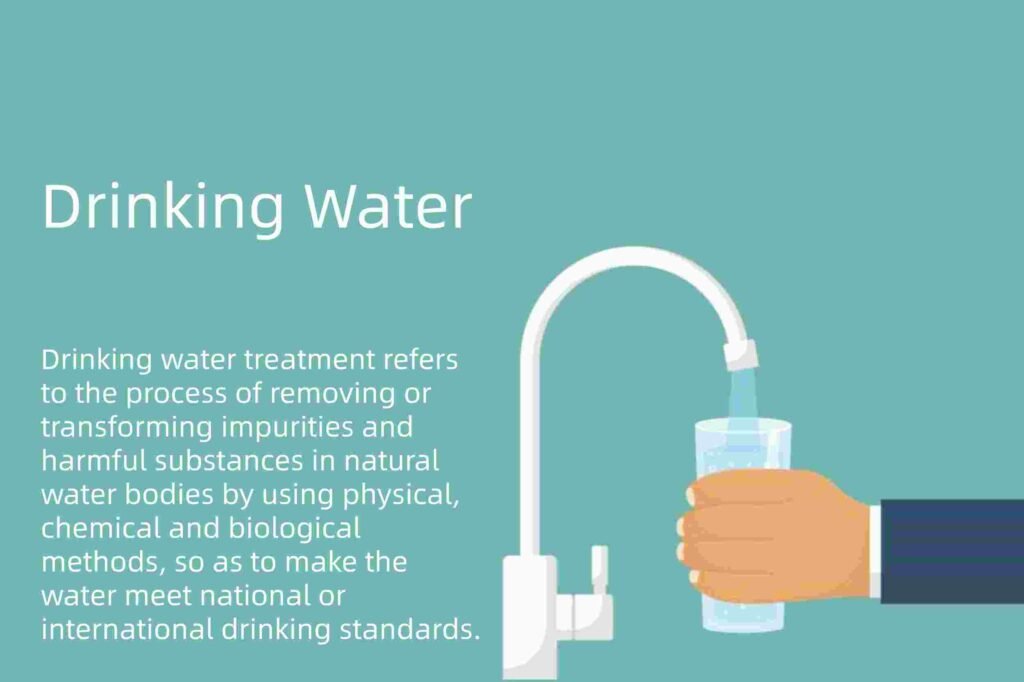
The Human Journey Toward Pure Drinking Water
Over time, human societies have consistently faced one critical challenge: making water safe for drinking. As populations grew and settlements expanded, water sources became increasingly vulnerable to contamination. Consequently, the need for purification emerged as a matter of survival.
Initially, simple filtration methods such as sand, gravel, and cloth were used. However, as awareness increased and diseases linked to unsafe water were identified, more advanced techniques were developed. Gradually, the journey of drinking water treatment began—driven by necessity, innovation, and responsibility.
As a result, the efforts of researchers and R&D experts became invaluable. Their work has continuously improved water treatment technologies, ensuring higher safety, efficiency, and reliability. Importantly, this work has never remained confined to laboratories alone. Instead, it has evolved into a service to humanity, protecting millions of lives across the globe.
Water Purification as a Form of Charity
In addition, Islam places immense importance on providing clean water. The Prophet Muhammad (peace be upon him) stated:
“The best charity is giving water to drink.”
(Musnad Ahmad)
This hadith highlights that providing water is not merely an act of generosity—it is one of the highest forms of charity. Therefore, it can be understood that purifying water, improving its quality, and ensuring its accessibility also fall under this noble act.
When drinking water is purified, diseases are prevented even before they begin. In essence, clean water acts as preventive medicine, reducing the burden on healthcare systems and safeguarding human life. Hence, water treatment is not just a technical process; it is an ethical and spiritual responsibility.
Reflection on Water: A Divine Command
Furthermore, the Quran repeatedly encourages reflection. In Surah Al-Waqia, Allah asks:
“Have you seen the water that you drink?”
This question invites deep thought. Where does this water come from? How is it purified? Who ensures it is safe? These questions are not asked casually; they are meant to awaken awareness and responsibility.
Accordingly, understanding drinking water treatment is not only a scientific pursuit but also a fulfillment of divine instruction. Observing, researching, and improving water systems become acts of reflection and gratitude.
Evolution of Drinking Water Treatment Technologies
With time, drinking water treatment technologies have undergone remarkable transformation. From basic filtration to chemical disinfection, and now to smart filtration systems, the evolution has been driven by innovation and necessity.
Today, advanced systems such as:
-
Reverse Osmosis (RO)
-
Ultrafiltration (UF)
-
UV sterilization
-
Smart monitoring and automation
are being applied at household, commercial, and industrial levels. These technologies ensure that water quality meets international safety standards while remaining efficient and sustainable.
Consequently, water treatment plants are no longer limited to large municipalities. Compact systems now allow safe drinking water production in:
-
0.5-liter bottles
-
1.5-liter bottles
-
5-liter containers
-
19-liter jars
as well as fee-based water supply services and community filtration plants.
Clean Water for Homes, Industries, and Communities
Equally important, drinking water treatment plays a vital role in industrial processes, healthcare facilities, educational institutions, and rural communities. Each sector requires water of specific quality, and modern treatment systems are designed to meet these varied needs.
Therefore, anyone considering the installation of a drinking water treatment plant—whether for business, community service, or industrial use—must understand this complete journey of purification. Knowledge empowers better decisions, efficient systems, and sustainable outcomes.
Water, Life, and Responsibility
Notably, Islam emphasizes the protection of human life above all else. In Surah Al-Maida, it is stated:
“Whoever saves one life, it is as if he has saved all of humanity.”
Providing clean drinking water directly contributes to saving lives. Thus, water should never be treated merely as a commercial product. Instead, it must be recognized as a basic human right and a shared responsibility.
Planting trees, conserving water, and investing in purification systems all contribute to this mission. Each effort ensures that future generations inherit a safer and healthier world.
A Timeless Mission for the Future
Ultimately, the story of drinking water treatment is not just about technology. It is a story of human needs, continuous effort, innovation, faith, and success. Every drop of water is a trust, and every effort to purify it is an act of devotion.
In conclusion, this journey invites professionals, technologists, and communities to come together—where water is respected, protected, and delivered with integrity. Because when water is preserved, life itself is preserved.

